Tuesday, September 25, 2018

The Calendar


     Old man Autumn must have looked at the calendar Friday, because he roared in during the night, rattling the windows and dumping rain on the roof. At midnight, when one of the dogs had to go out, the temperature outside was sixty. But shortly afterwards the house shook and rain poured like pea-stone from a dump truck. By breakfast the temperature had dropped to forty-nine and the howling northwest wind started breaking up the clouds.
     Flannel shirts and added layers. Chores first and then off to the woods to run the dogs and find some grouse.


Saturday, September 22, 2018

Ten More Days


     Soon Bird season will open. For the upland hunter, it is the most anticipated day of the year. Here at Camp Grouse, even the dogs know it is coming.
     Maybe it is changes in the weather, or that we’ve been going out to run with their bells on. I guess that is a dead giveaway. Perhaps they see the hints of colors on the hillsides too, just like we do.
     Whenever two or more bird hunters get together the conversation always comes around to how many birds they have been seeing. Birds in the roads are mentioned and maybe a woodcock seen flying at dusk. Of course, everybody is delightfully vague about where they’ve been seeing birds. It is fun to see the enthusiasm of new hunters.
    The trap is out to throw clay targets, set up on the side deck. We’ve thrown a few to refresh muscle memory. The gun comes up like it always did. It would be fun to shoot at a skeet or sporting clays range if one were nearby, but we’ll settle for targets thrown out beyond the drop-off beyond the house. If a target is missed, the dogs disappear down into the tall weeds to bring it back, sort of sticking the lousy shot in my face.
     New boots are broken in. The bird hunting pants will get a new treatment of wax.  The vest will be dug out and hung by the back door. There isn’t much more to get ready, which is one of the beauties of upland hunting.
     Tomorrow we’ll be out scouting for birds and running the dogs. There’s a ridge we want to explore. We have to get in shape too.


Tuesday, September 18, 2018

The Stream


      Moss under foot silenced my feet. The path slipped through shade beneath very green maple leaves then turned down into the darkness of softwood trees. Where the ground flattened, woven roots formed a bridge over a tiny trickle, then waist-high ferns shouldered the narrow trail between tall straight spruce and fir trees. 

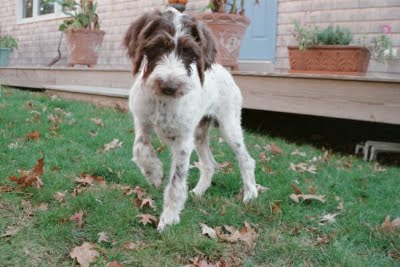
     My dogs bounded ahead and I hoped they weren’t cooling themselves in my favorite fishing pool. The water would be low and those brook trout spook easily. Colby, the older German wirehair trotted back looking for me. Maggie, ever the hunter, was standing atop the bank by a bend of the stream, looking down into the water. Frogs? Maybe.
     The quiet babble said the stream was low long before I saw it. Stepping from the trees, I noticed that one channel was completely dry and what was once an island in the stream had become part of the far bank. Shoulder high grass grew where only pebbles lay before. After reminding the dogs that stealth was required, neither entered the water, much to my relief and surprise.
     Studying the water and hoping for some inspiration, I missed my pipe that I hadn’t smoked in almost thirty-five years. Which fly? No insects were on the water, but the water was mighty thin. I opted for a tiny caddis dry.  
     Where there used to be a deeply undercut bank a tree stretched across the stream. Gravity had taken its toll. The water still swirled against the far bank, where the water piled against the log. I floated a fly in. Nothing, and then several nothings. I contemplated changing to my trusty wooly bugger, but upstream a kingfisher burst from a dead spruce. The pool beneath that bird’s tree looked promising.
     With light footsteps, I crossed a stony shallow riffle to wade through the tall grass of what used to be the island. Both dogs snuck along with me and, when I stop next to the stream to fish, they sat to watch.
     Through the glassy surface it was easy to see the brown silted bottom of the pool. Trees over the left bank blackened the water with shade, but bright sunshine lit most of the pool. Dark cigar-shaped shadows on the bottom came from holding trout, possibly a dozen with one or two longer than the spread of my hand.
     Nervously, I worked out fly line. A fleck of water from the line hit the surface and the trout flinched. My next forward cast landed short and the trout twitched again, but did not move far.
Can you see the trout?
     After the fly drifted back I lifted it off the water and false cast over the weeds along the stream. When the distance felt right, I let the fly drift down ahead of the trout.
     Pandemonium! Some dashed left, others right. One snatched the fly off the surface.
After a short battle and a sniff by the dogs, that trout was returned to swim again. Life doesn’t get much better than that.

Monday, September 3, 2018

An Expedition


What Makes an Expedition?

Merriam-Webster defines an expedition as a journey or excursion undertaken for a specific purpose. That definition covers a lot of territory. It could mean traveling to the North Pole to see what is there. Or flying to the moon. Or it could mean a hike into the forest, searching for a wilderness trout stream to see if brook trout swim in its water or if woodcock live among the alders on its banks.
Looking for a remote stream sounds better than the cold of the arctic and much safer than flying to the moon.
There’s a locally well-known stream that has no easy access and long has been an interest of mine. The logging road that parallels part of it is gated and the headwaters are more than a dozen miles from that gate. Hours have been spent pouring over maps and aerial pictures trying to find a reasonable way in.
Finally the pieces fell together. An accessible logging road leads to a grown in logging road that shows up in aerial photos. It should only be a few miles down a long grade to find the stream. What would it be like? The expedition was planned…lunch, fly rods, camera….
The hike in was uneventful. Icy cold water flowed over a gravelly bottom, in spite of the hot August weather. Alders covered the entire wide bottom of the valley until the land started to rise into hardwoods on the hills. The remote place felt like we were the only people on Earth.
And I am not going to tell you more than that.


Monday, August 27, 2018

Late August


October still seems a long ways off. Hot muggy weather makes each day pass slowly. Maggie, our youngest wirehair, spends much of each day in a cool depression dug into the earth beneath the deck. Colby, our older wire, doesn’t seem to mind the heat at all and sleeps in the driveway.
The best parts of each day are the cool hours in the morning before the sun climbs high and as the heat fades when the late sun disappears over the distant hills.
After dinner each day, we walk the hundred yards from our home to the vegetable garden to see how things have progressed. The dogs love the routine and Maggie usually runs big sweeps around the field, as if on patrol, while Colby will stay back near the house, as if guarding it in our absence. It is a routine we all enjoy. Lately, apples dropped from a wild tree have been tossed for retrieving.
But tonight, as Maggie trotted along the edge of the field, she was jerked to a stop as if tethered to a snubbed leash. I hurried over and walked into the woods ahead of her point. A woodcock tweetered upward and away thirty feet beyond her nose.
Isn’t life grand?

Monday, August 20, 2018

August


Hot weather and humidity, it is not a favorite time of the year. Outside chores are grueling and the dogs spend their days in cool holes dug beneath the deck. Grasshoppers and crickets ratchet their hot weather songs, sometimes unbelievably loud. Haze turns distant hillsides a bluish gray. Thunderstorms that promise short periods of cooler temperatures slip by to the north or south and never fulfill their possibilities.
Trips to the lakes cool us off and the dogs enjoy retrieving from the cold water. Early mornings are the time to get things done. By noontime it is best to hide in the shade or slip back up to the lakes. Ice cream beckons. We try to remember our plight is nowhere near as bad as for those living further to the south.
But the spring was dry and the weather favorable for broods of grouse, so life is good. Without looking for grouse we find them along the roads and they explode next to hiking trails on early morning walks. Friends ask about the upcoming grouse season and I answer, “Optimistic.”
But I do that every year.


Wednesday, August 15, 2018

Time…


This is from my journal, seven years ago...

My oldest German wirehair, Chara, was ten this summer.  When I stroke her whiskers back I notice cloudiness in her eyes that wasn’t there before.  Her spirit is still strong, maybe stronger than mine, but she is quite content to curl up on a rug and wait for something to happen.  Yet on walks she still hunts for mice and points song birds for her own entertainment, and physically she is still strong.    With the excitement of a pup, she runs for the back door at the sound of the bell on her hunting collar.  Chara’s colors are white and liver, so the new white hairs aren’t as noticeable as if she were darker, but I do see white flecks where solid liver used to be.  Age catches us all.
Pointing as a pup.
          Inside her head are ten seasons of experience, starting with her first season when she pointed quail at five months of age.  I don’t remember if she retrieved them, but I killed several quail over her points that first fall.  The following season we hunted woodcock and ruffed grouse, and I can remember every detail of her first wild bird, a woodcock shot in Randolph, New Hampshire, at the end of a very long day afield.
So many days in a duck blind.
          I remember her first duck hunt and how she retrieved a mallard as if she’d done it a hundred times before.  And the first pheasant she pointed, in a field of low cut grass, where I was so convinced that she was false pointing that I never even raised my gun when the big squawking cock finally flew.
          Last season was her best ever, pointing grouse after grouse, almost never bumping a bird.  Certain days stick in my mind and I hope they always will.  Pointing side by side with our younger dog, she never looked better.  With tremendous luck I killed the first partridge of the season, on opening day, while the two dogs pointed shoulder to shoulder.  The retrieve was a bit contentious and they each somehow ended up with a wing, but remembering it makes me smile. 
          So I have to wonder how much longer Chara will hunt.  This season looks like a sure thing, which is good because the bird numbers are up.  Our two year old German wirehaired pointer, Colby, learns much hunting with Chara and hopefully will continue to absorb the older dog’s wisdom.  At times Chara appears impatient with the younger dog, but more often seems oblivious to the youngster’s presence.  Colby honors easily, almost never interrupting one of Chara’s points, obviously respecting the older dog’s rank.  TA few times last season Colby pointed partridge on her own, along with dozens of woodcock, none of which I’m not sure would have happened without Chara’s example.
          Now Chara dreams on the rug by my feet.  I see her feet twitch and hear muffled barks or chirps, and sometimes even a low growl.  I wonder if she recalls the same events I do, and, if so, what her favorite memories are. 
          Chara will remain top dog until the day she is done, and I plan to make certain she knows it.  We have a long history together.

Chara lived on to hunt fifteen seasons, what a time we had.    
         

Forever in the grouse woods.


Tuesday, July 31, 2018

Hunting Seasons


The length of ruffed grouse hunting seasons vary from state to state. Some bird hunting seasons run well into the winter, while other states stop much sooner, some even in the fall. A good way to get an argument started in grouse camp is to ask whether late season grouse hunting affects the bird’s population.
Samantha Davis, a University of Maine graduate student, did research with the MDIFW to see how the state’s management of ruffed grouse impacted the population. The results can be seen at the link below. The news is encouraging.


Do you see him in there?

Thursday, July 26, 2018

Grouse Numbers


The number of ruffed grouse in any area has always fluctuated. Many places there seems to be a definite ten year cycle, with numbers gradually building before dropping off again. This seems most pronounced in the Lake States area. In the northeast the cycle seems less noticeable. Weather, abundance or lack of food sources, and number of predators all play a part. Now West Nile virus is also a concern.
For the first time ever the Wisconsin Natural Resources Board has proposed shortening the grouse season because of unusually low bird numbers. The details are in this link http://pointingdogjournal.com/proposed-shortening-wisconsin-ruffed-grouse-season/

The proposal will certainly stir a lot of public comment. Wisconsin has always been a leader in ruffed grouse hunting.


Tuesday, July 10, 2018

Mama Grouse


It is July 10 and the weather is perfect, lots of sunshine with dry air. Last week it felt like the tropics around here, with high temperatures and high humidity. This week feels like heaven.
After dinner, we decided to take the dogs for a walk up in some high country, where a breeze might blow the mosquitos away. The old road in to where we planned to hike is rougher than a toad’s back, so we had to inch our way along.
In a stretch where the foliage on either side of the road was as thick as a wirehair’s coat, a grouse stood in the road. We stopped. Then there were three more, then two, then some disappeared and then three ran across while a straggler flew back behind us, then another dashed to the left and another one flew into a fir tree.
One was definitely larger, probably the mom, and there were probably six young ones half-again larger than a quail. Hopefully she was teaching them roads are a dangerous place.
It sure was fun to see.


Spaying?


More Negatives…

Here’s more information on health issues brought on by spaying.


A smile between the feathers.


Monday, June 25, 2018

The Chicks Are Out

The little chicks scattered back to the weeds.


The weather is hot and the chicks are out. I don’t mean the scantily clad ones flaunting their good looks at the beach. I mean the baby grouse have hatched. 
Almost daily someone posts pictures on social media of baby grouse, usually accompanied by their mother and crossing a street somewhere.
Fortunately, grouse chicks can feed on their own almost immediately after hatching and can wander with their mother up to quarter of a mile from where they were hatched. Less than a week after hatching they can fly, looking like giant bumble bees. They grow from less than an ounce, at hatching, to a little over a pound in about four months.
The biggest danger in the first days of their lives is cold rainy weather. A cold rainy stretch can wipe out whole broods and decimate a population.
This year northern New England has been cool but unusually dry. Come October we will see how the broods did.

Thursday, June 14, 2018

What’s It to You ?

Speed on the water.

     I once lived amongst the world of diehard sailors. Some raced two or more times a week and had to be the first to everywhere. Every piece of gear on their boats was of cutting edge technology. Other sailors just wanted to be out on the water, headed for a quiet cove to spend the day. Some had to cross an entire ocean to be happy. A few never went anywhere, but instead used their boat mostly for entertaining or just a platform from which to read a book. Many of my friends worked on boats, lived aboard boats, and went sailing on their days off. Every one of those sailors enjoyed their boat and who’s to say who enjoyed theirs the most.
Which fly today?
     Fly fishing is sometimes like that. One angler has to match whatever insect is hatching, while another is quite content to throw the same fly that he threw the day before and the day before that. Some fish as if their life depended on it, while another may find a sunny spot on the shore to stretch out and take a nap. Who’s having the most fun?
     Bird hunting can be the same way. Some hunt until their legs are ready to fall off, with anything less than a limit an impossible thought. Others may mosey along, content to watch the dogs work while they chat with a buddy. Many love their old shotguns and bird hunting is an excuse to get them out. Bird dogs are the passion of a huge number of bird hunters, and many wouldn’t bother to walk into the woods without one. To some, it is an excuse to be out in the woods watching song birds, looking for deer tracks, and possibly shooting a bird along the way. Who is having the most fun?
     When I was younger killing birds seemed very important, much more so than it does now. My dog was steady to wing and shot and, by the time a day was over, my legs would have felt better if they had fallen off. I have to admit, I always slept soundly after a day in the woods.
Georgia pinning a ruffed grouse.
     I sleep just as well now, but during a day afield I notice a lot more. Around here there are old stone foundations and long lost apple trees. A beaver pond might harbor a wood duck or a half dozen black ducks. A woodcock or two might hide among the alders in valley around the other side of the hill…or is it the hill beyond that? Sometimes I just follow an old logging road to see where it goes.
     Every day is an adventure. My dogs no longer are steady to wing and shot. Hunting alone that was difficult to enforce and caused a lot of frustration, both for me and my dogs. They still hunt hard and point with intensity, but more like cowboys than mechanical soldiers. If dog safety is an issue on low flying shots, I just let the bird go. One bird in the game bag feels great, and after that anything more is a bonus.
     Don’t get me wrong, I love to watch dogs preform flawlessly and to see birds drop in front of gunners that never miss. You have to admire the determination and discipline that brings such results. If it makes them happy, and I certainly hope it does, it makes me happy.   
     Instead, my dogs are my buddies, under foot both in my shop and in our home. I still try to rule the roost and make sure their manners are impeccable, and we do get out in the woods often, probably much more than most. Experience and birds in front of the dog’s nose are the best teachers, so we try to get out a lot..
     But I’m willing to cut them some slack, as long as they are willing to return the favor.


Thursday, May 17, 2018

The Middle of May


The grouse are pounding, literally. Some days it goes on all day long, others less so. Seldom during the day can you not hear them for long. The leaves aren’t out, but the red maples are pink on the hillsides. Distant pale green patches mark clusters of poplars. Water seems to be rushing everywhere. Only during the past week has the ice gone out on the lakes and the streams are still swollen.
Most of the logging roads are blocked off and they feel none too hard when you walk on them. It is spring in the North Country, a time of waiting. Luckily, the last week so so the weather has been spectacular, with blue skies and bright sunshine.  Woodcock are already nesting and maybe some of the young have already hatched. The woods will dry out soon and the streams will settle and warm. Warblers are already singing from the trees. Soon the trout will be feeding on hatching mayflies.


Monday, April 23, 2018

Old and New


     We live about as far north as the early farmers ever tried to work the earth, at least in New England. Most left not long after they started and there never were a lot of them, but occasionally an abandoned foundation or old stone wall is stumbled upon.
     In 1815, the volcano Mount Tambora exploded in the Dutch East Indies and set off a global weather anomaly that caused the summer of 1816 to be known as The Year Without a Summer. That June it snowed six inches in many parts of northern New England and it didn’t melt for a week. The event convinced many that farming this far north was impossible.
An apple tree gone wild.
     So the abandoned farms are few and far between. We find them occasionally, usually with a few apple trees nearby and maybe a stone wall or foundation. The bears do a number on the apple trees sometimes, but those old trees are tenacious and wild ones abound. Abandoned fields in the forest are called openings by the locals, and every year the openings grow smaller and rarer. High bush cranberries, poplars, and blueberries creep in, soon followed by spruce and fir trees. Those left-behind openings can have some excellent grouse hunting around the edges.
     Up here, the more common grouse habitat is logged over country that is rebounding. Usually an area will provide good grouse hunting a few years after it is cut, until the trees are twenty years old or so and starting to mature. Throw in a few softwood trees for shelter and a stream, so the grouse can pick at washed up gravel, and that cutting is going to hold grouse.
     So up here we study Google Earth and tramp all over the place looking for grouse around these cuttings. I like to follow the edges, particularly if poplar and maple are growing and softwoods are close by. For reasons that I have never figured out, if choke cherry is the predominate specie coming up there seldom are grouse. High bush cranberry, blueberries, raspberries, and mountain ash are a bonus.
     Imagine my surprise when the edge of a clear cut led into a stand of wild apple trees, some of them thirty feet tall, with spruce and fir trees, red twig dogwood, and young maples mixed in. It certainly looked like an abandoned orchard. Some areas even had patches of grass remaining. The nearest paved road was seven or eight miles away, and the nearest gravel road half that.
My old girl Chara on a grouse.
     And there were grouse, lots of them, and even a pair of woodcock.
     A wide circle through the apples brought me back to the edge of the clear cut where stones shrouded in moss had been arranged to make a small foundation and a rock wall hid beneath leaves and lichens. Kicking fallen leaves around produced a rusty barrel hoop, but nothing more. Maybe someday I will go poke around again.
All that remains of a homestead.
     I am sure others have found that covert where new cover sits next to old, but I’m not likely to share it with many. It is a rare gem indeed.

Wednesday, March 14, 2018

More information on dog health....

This subject is one I have been following closely as more information becomes available. If you have a puppy or are thinking about getting one, this is a subject you may want to do some research on.


Saturday, March 10, 2018

From The Journal

    The opening weekend of the 2003 bird season I took my German wirehair pointer north for her second trip to the North Woods. Our first morning up there the woods dripped from a nighttime of steady rain and the sun hid behind a dark mottled sky.
      As Chara hunted down the slope ahead of me, I followed through alders and young poplars, trying hard not to brush against anymore wet foliage than necessary. We were searching for woodcock in those alders. Thirty years earlier I had hunted that same covert with my first bird dog, a boneheaded Brittany spaniel that taught me a lot. Unfortunately, I could teach that dog little.
       It’s funny how you don’t mind the wet woods once you find birds. At one point, before we had found any birds, I remember thinking that none of my friends would have enjoyed that morning, with soft mud sucking at boots and soaked cold clothes plastered to the skin.
      Near a brook that twisted down the hillside we chased two grouse in circles. It was like they didn’t want to leave their home territory and kept circling back. A few dozen fat fir trees along that stream broke up the yellowing poplars and still green alders, and provided excellent cover for those rotating grouse. Those stubborn leaves gave the grouse such an advantage that we finally lost track of them.
      But there were woodcock and Chara proved her worth. I shot as the first bird disappeared into the foliage and felt certain it was a clean miss, but my girl came bounding back with bird in her mouth. And the day kept getting better. When we walked out of the woods at eight-thirty a limit of woodcock rested in my game vest.
      Yet the best part of the morning was sitting on the tailgate of my truck and sharing cookies with Chara. 
      Parked on a logging road in the middle of nowhere, we watched the sun burn away the clouds to illuminate the reds of the maples and golds of the birches. As the air warmed, it smelled of sweet drying leaves and spicy grasses. The only sound came from far away in the hills, where a raven made his soulful cry.


Sunday, February 11, 2018

The Hill

      The hill has an odd name. It is named after the same man as the town it is in, but that is all I’m going to tell you. Years ago it was out in the middle of nowhere and I hunted deer there and birds too. A memory sticks of walking out of the woods, moments after legal shooting time had passed, and seeing a monster buck ghost cross the woods road ahead of me. But that is another story.
      What made the hill special were the old farms. Up on the top there were two, both long abandoned, but marked with sagging homes settling into old stone foundations. In the overgrown fields game had trampled paths between the scraggly apple trees and the cedar swamp down below. Old tote roads crisscrossed the upper wooded slopes, and every single one of them seemed to lead exactly where you wanted to go. It was that kind of magical place. In a field, halfway down the eastern side of the hill, stood a box-like camp where an old woman lived by herself during the summers. I wish I could remember her name, she was in her seventies when we met.
     Somehow, two decades slipped by without visiting that hill, but finally I went back with my German wirehaired pointer pup named Chara and my Parker shotgun that had turned a hundred years old that year.
Busted up country
      Unbeknownst to me a horrific ice storm had flattened the trees a few years earlier, obliterating most of the landmarks. Up on the top of the hill two homes had been built near the ancient fallen ones and the old fields there were posted. Travel through what had once been woods was impossible, with ice-shattered trees broken and lying in a tangled mess. Chest high raspberries flourished in the new sunlight, with waiting claws that seemed incredibly sharp.
      After an hour or so of searching, we found that little camp in the field halfway down the hill. Someone had been there recently and it looked much like I remembered it. Above the house a basin had been re-dug next to a spring and firewood was stacked on the far side of the porch.
      Where an old footpath came down the hill into the field, I tried to pick my way between the raspberries’ thorns. A fallen maple trunk blocked the way, then another, then six more and the path disappeared among tangles of new raspberry vines. And then Chara flushed a grouse.
      She went into overdrive, pushing under or jumping over obstacles and oblivious to the vicious briars. Several more grouse exploded into the sky. I sat on a log and watched, knowing she would be back eventually and was learning a lesson along the way---dogs can’t catch grouse.
     Her tongue looked a foot long when she came back panting. Even that had been pricked by the thorns and wore flecks of blood. We found that spring fed puddle near the house and she stretched right out in the icy water to drink her fill. I wondered what had become of the woman that used to live there, she should have been over a hundred at that point. And who kept the place up, mowing the grass and piling the firewood? Obviously someone used the place in the summers.
      Sauntering out the old tote road toward the truck, Chara continued to hunt, but at a slower pace. It was obvious she would grow into one heck of a bird dog. I carried my old Parker shotgun broken open and draped over my shoulder. It had been quite a day. And of course a lone grouse dropped out of a busted-off old spruce and flew straight away down the road, offering one of the easiest shots a man could ever hope to see.


Chara in her younger days.


Thursday, January 11, 2018

Squeaky Snow

 
Maggie
    As I write this it is late December at Camp Grouse. Among the hillside hardwoods two feet of snow covers the ground. Temperatures have been below zero for days and dipped down to thirty below a couple of nights. Cabin fever starts to set in after a while and when temperatures climb to near zero it is time to put on the snowshoes.
      Our younger German wirehair, Maggie, is game to go. She loves winter and rolls in the snow daily. Colby, our older girl, will pretend to want to go, but after I leave she’ll curl up quite content beside the wood stove to dream of summer.
      From the house, Maggie and I head down into the softwoods, snow squeaking with every step and our breath in a cloud. She bounds through the snow with enthusiasm. In the shelter of the spruce and fir trees the snow is hard, crunching beneath the snowshoes despite the dusting of fluff on the top. Maggie can easily dash about atop the snow, following the confusion of snowshoe rabbit tracks.
      Deer have passed through, punching deep imprints in the hard snow. The coyotes barely made tracks, but traveling on top with such an advantage over the deer.
      Our favorite brook trout stream is silent, capped over with ice and snow. It is hard to imagine trout fishing and I wondered where the brook trout went for the winter. Surely they are not in the same riffles as they were in July, but probably in the deep dark holes where the current is slow or nonexistent.
      We follow downstream. Maggie shows no interest on going out on the ice, which is what I had hoped. I like smart cautious dogs. They seldom get porcupined or skunked more than once.
      Snowshoes on crusty snow drown out any other sound. Mice tracks, squirrel tracks, rabbit tracks, all create a puzzle. Fat well-spaced trunks of conifers cover the plateau along the stream, making travel easy.
      We pass where the coyotes killed a deer the previous winter. Maggie sniffs about and I wonder if there could still be scent after so much time. Dogs amaze me with their noses and nothing seems impossible. She squats to urinate, to say to the coyotes “Hey, I was here”.
      Leaning alders, bent by the snow, block the path and I crouch to walk under them. A busted fir tree, broken by an early winter wind, demands a detour. Another fallen fir, this one uprooted, reaches out halfway across the stream. Eventually the stream pinches against a steep ledge to cut off our course, so we turn back and inland to follow the edge where the softwood trees of the lowlands meet the hardwoods of the hill.
      The snow is deeper, but Maggie still flies about, first up the hill then down into a thicket beneath a cluster of firs. She points, relocates, points again, and then zips off to hunt still more. 
      Grouse tracks cover the snow where she stopped. I stare up into the trees, hoping to glimpse one, but see none. I did not bring a shotgun. With the extreme weather I really don’t feel like bother them and seeing the tracks is enough for me.
      Heading uphill and back toward home, another shattered fir tree blocks the path. I trudge around it beneath three big softwoods. Ahead of me, Maggie again points for a moment before charging onward. Grouse tracks go every-which-way where she stopped. The bird never wandered far, but created a tangle of tracks beneath a cluster of young maples, all in an area the size of a large dining table.
      I search among the tree limbs, but again find only empty branches. Hopefully the bird is sitting somewhere safe with its belly full. We are close enough to the house, so, if this one is a male, we will sit on the deck and hear his drumming in the spring.
      A late day chill reminds us it is late. The low winter sun has slipped behind the hills early and the sky has dissolved from blue to the color of steel. Up the hill we find a skid road that takes us around the bottom edge of another softwood stand. Water runs beneath the snow, creating a murmur that is almost impossible to hear. In the summer mud would be everywhere, but a pristine white blankets everything. The deep snow makes breaking trail work, but Maggie still bounds about. Eventually, the road leads to the far end of the field behind our home and I can see smoke wafting up from the chimney.
      There is no place I would rather see or be.